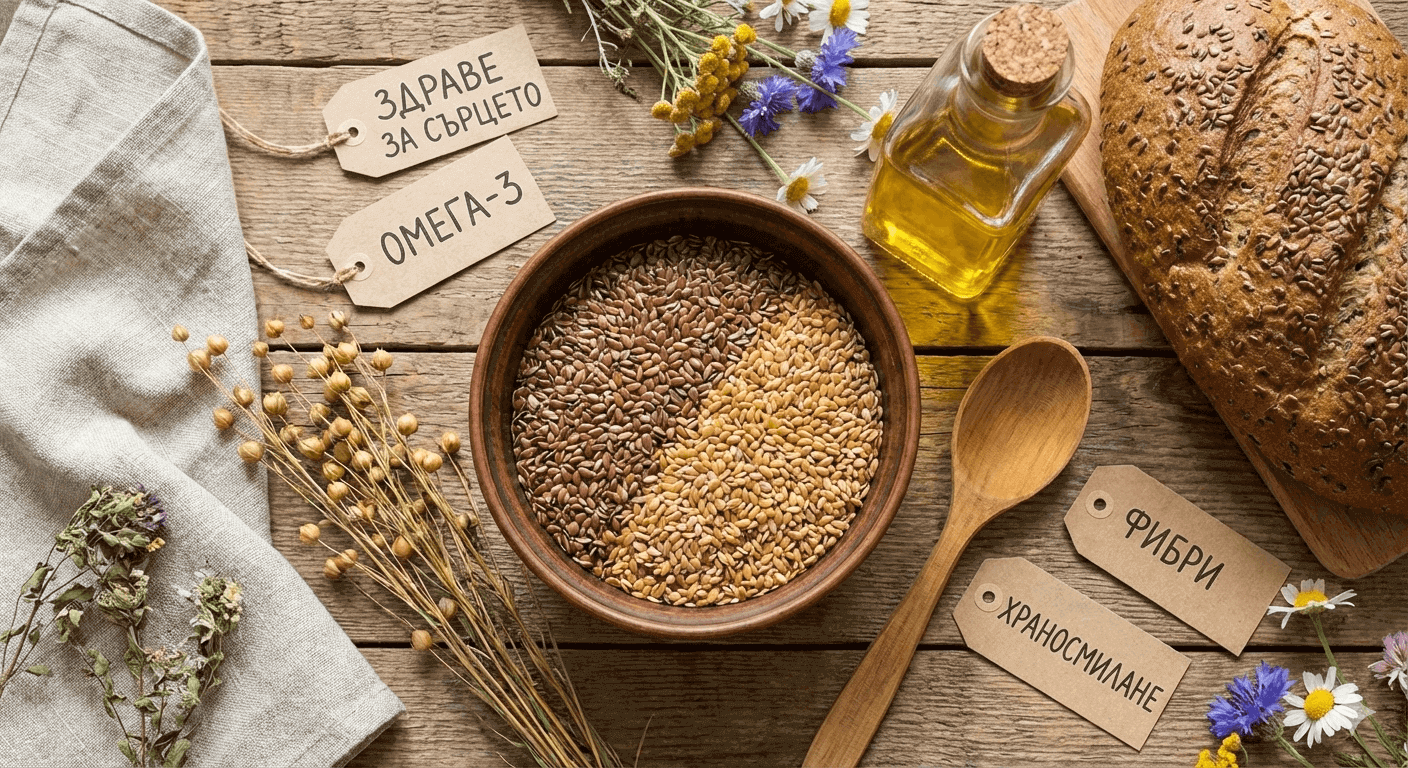
Flaxseed benefits
Flaxseed (Linum usitatissimum) is one of the oldest cultivated foods.
What does flaxseed contain?
Omega 3 (alpha linolenic acid) a plant source of beneficial fatty acids that are actually quite important.
Soluble and insoluble fiber, support peristalsis and regulate blood sugar. However, movement is key to lowering blood sugar after a meal. After a meal, it is not advisable to immediately switch to sports, wait at least 30-40 minutes and start with light stretching and so on to more strenuous sports activities.
Lignans plant antioxidants with phytoestrogenic properties. It sounds complicated because it performs complex processes in our body to make us feel good.
Proteins, magnesium, calcium, iron and B vitamins.. We need them every day because they are quickly depleted, especially in the absence of a thyroid gland.
Main health benefits of taking it
It helps digestion completely.
Fiber increases the volume of stool and promotes regularity. Soluble fiber creates a gel that slows the absorption of sugars in the intestines.
How to take it correctly?
Recommended daily dose one to two tablespoons of ground flaxseed or one tablespoon of flaxseed oil. For capsules, follow the label. IMPORTANT: doses vary, so consult a doctor if you have any chronic diseases.
If you're looking for a direct EPA/DHA source instead of converting ALA, I use this All organic Arctic cod oil with olive oil and D3 for heart and brain support.
Examples of use
Add to yogurt, oatmeal, smoothies, salads or baked goods (after baking, add ground seeds for less loss).
My personal advice - For maximum effect, use ground flaxseed (not whole), because the shell is difficult to break down in the stomach. I once tried soaking it in water for 1-2 hours and consuming it that way, but it tasted terrible. I also tried consuming it with honey, as well as blended and mixed with honey, but it seemed to lose the properties of flaxseed. In another article, I will explain a few delicious and truly adequate practical recipes that I have discovered without the help of the GPT chat.
Heart health and inflammation, what do we need to know?
How and why, above all, can "ALA" reduce inflammatory markers and support the lipid profile!? Regular consumption is associated with benefits for the heart and not only. In case of heart disease, you need to first ask your personal doctor how exactly flaxseed is a suitable product for you.
Hormonal balance and antioxidant protection
Lignans act as phytoestrogens and antioxidants; studies show a potential role in menopause and prevention of some hormone-dependent conditions.
Blood sugar and weight control in men and women
Fiber and slow absorption of fats / carbohydrates help stabilize blood sugar and the feeling of satiety. This is key as a stimulus for the brain to trick it into thinking we are full for a period of time.
My experience in the kitchen with flaxseed
What is the difference between ground and whole flaxseed?
Ground flaxseed is better absorbed and releases omega-3. I tried it whole, but it is not mine, it passes through the intestines whole and nothing is absorbed.
How much flaxseed can I eat per day?
Usually one to two tablespoons of ground flaxseed. But better one tablespoon of flaxseed oil if there is no flaxseed on hand. And when taking medication or if you have any diseases, it is better to consult a doctor.
Can flaxseed oil be cooked somehow?
It is not recommended for frying, it quickly burns and starts to smoke. If you do not have a strong absorber, the kitchen will become a battlefield. It burns quickly, especially at high temperatures, but you can use it for salads and cold dishes without a problem.
For more practical tips, healthy recipes, and daily wellness inspiration, follow my updates on the official Facebook profile.